
See the accounting behind a loan
Every loan event posts a voucher as it happens, so the books are not a month-end reconciliation exercise.
Step 10 of 11 · Accounts
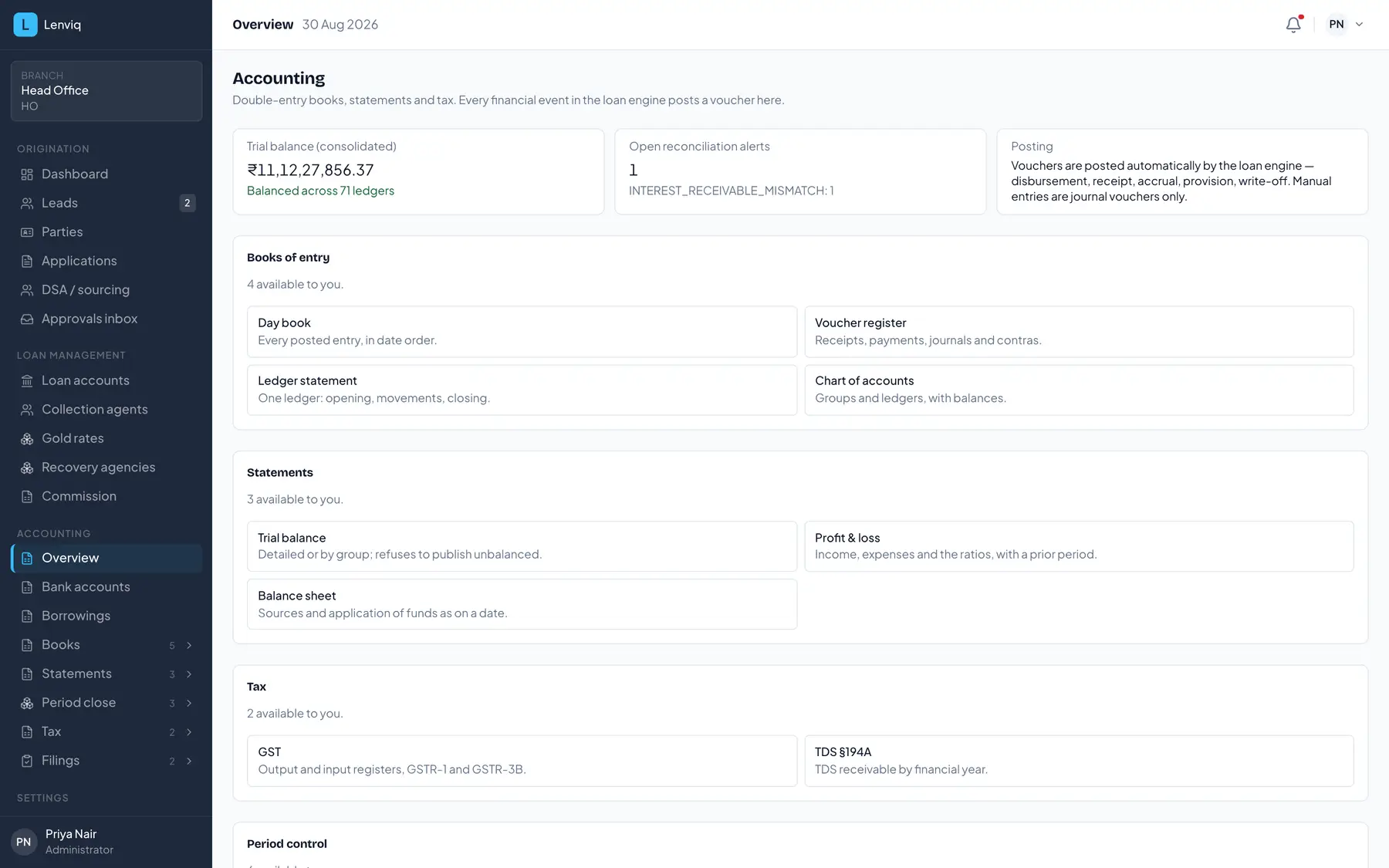
- 1The trial balance, consolidated. It says how many ledgers it balanced across.
- 2Reconciliation alerts, named. An unexplained difference is surfaced rather than absorbed.
- 3Vouchers are posted by the loan engine as events happen. Manual entries are journals only.
- 4The books of entry a Tally-trained accountant expects, by name.
Most lenders run an origination system, a servicing system and an accounting package, and spend the last week of every month making the three agree. Here a disbursement, a receipt, an accrual, a penal levy and a provision each post their own voucher at the moment they happen.
What that means in practice
- A trial balance that is current, not one that is assembled.
- Every figure traceable to the loan event that produced it.
- Immutable postings — a financial entry is never updated or deleted. A correction is a reversal
entry, so the history of what was believed and when survives.
Rounding lands in one place
Interest is rounded once, when it is booked, and the last instalment of a schedule carries whatever remainder is left — so the principal components add up to the sanctioned amount exactly, not nearly.
That is the check worth running on any lending system: add a loan's posted interest and see whether it equals the accrued figure on the account, to the rupee. If it is close rather than exact, the difference will turn up later as a rounding journal nobody can explain.
The rules behind this screen are explained on the blog and the terms are defined in the glossary.
From the people who wrote this
Run your lending on Lenviq
Every screenshot on this page is the running product, taken from a demo tenant. A demo walks the same path with your own products and schemes in it.
Lenviq is loan origination, servicing and accounting for NBFCs, built by FastLegal Technologies.