
Loan management
Loan management, from the disbursement to the no-dues letter.
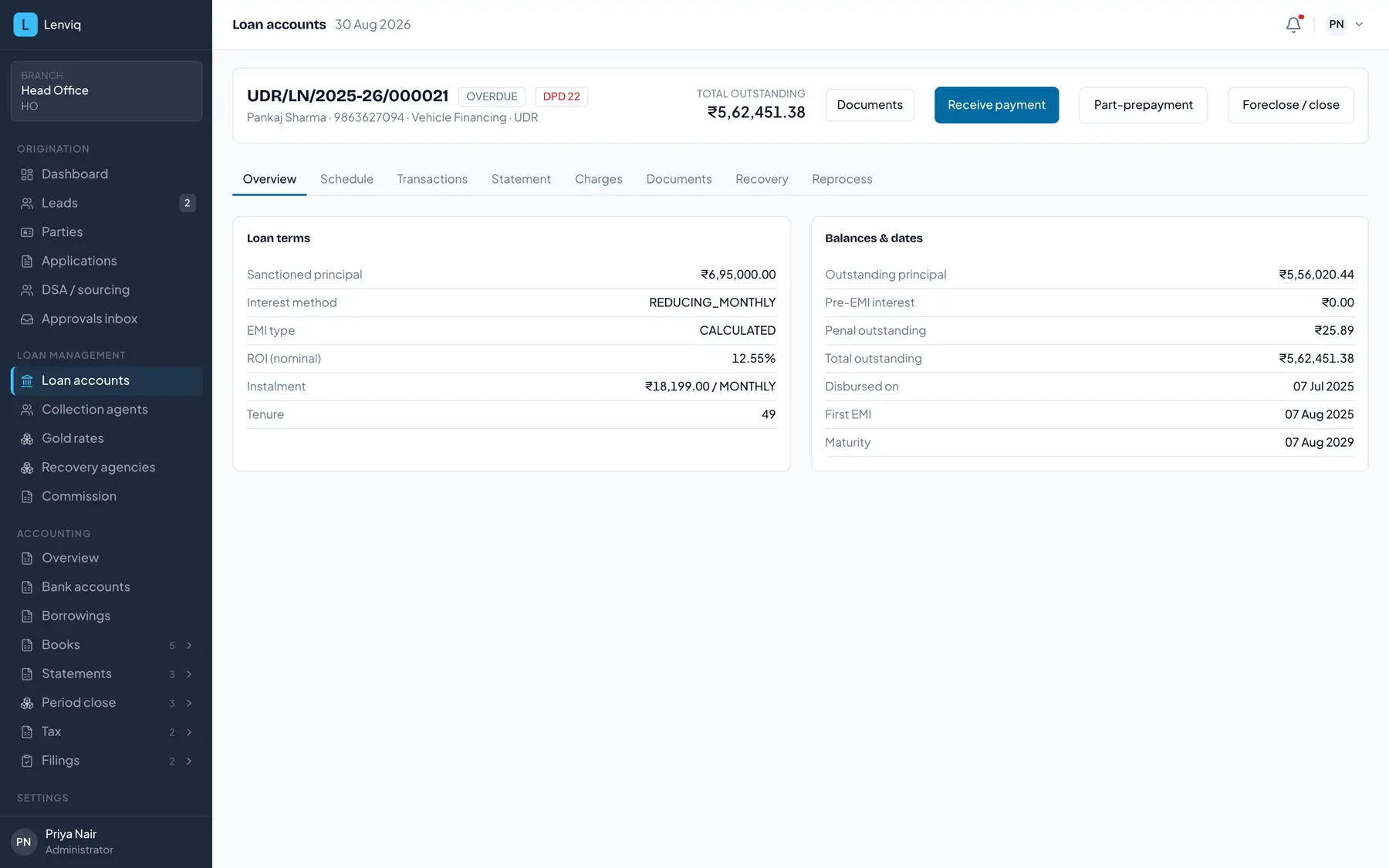
Once the money has left, lending becomes arithmetic that runs whether anyone opens the system or not. Interest accrues nightly, days past due count themselves, an account turns on the ninety-first day, income already booked has to come back out, and a provision has to stand against what is left. A loan management system is the thing that gets all of that right on a night nobody was watching.
This page is the servicing half. What happens before the money leaves is on the loan origination page, and the two meet at disbursement.
The book
Disbursement to closure
The night batch
What runs while nobody is looking
These are scheduled jobs, not screens. A lender who has to remember to press something has a book that is wrong on the days they forget.
Questions
What lenders ask about servicing
- What is a loan management system, and where does it start?
- It starts at disbursement. Everything before that — lead, KYC, collateral, bureau, approval — is loan origination. An LMS services what already exists: schedules, receipts, interest, charges, collections, classification, provisioning and closure.
- Does it do the accounting, or feed a separate ledger?
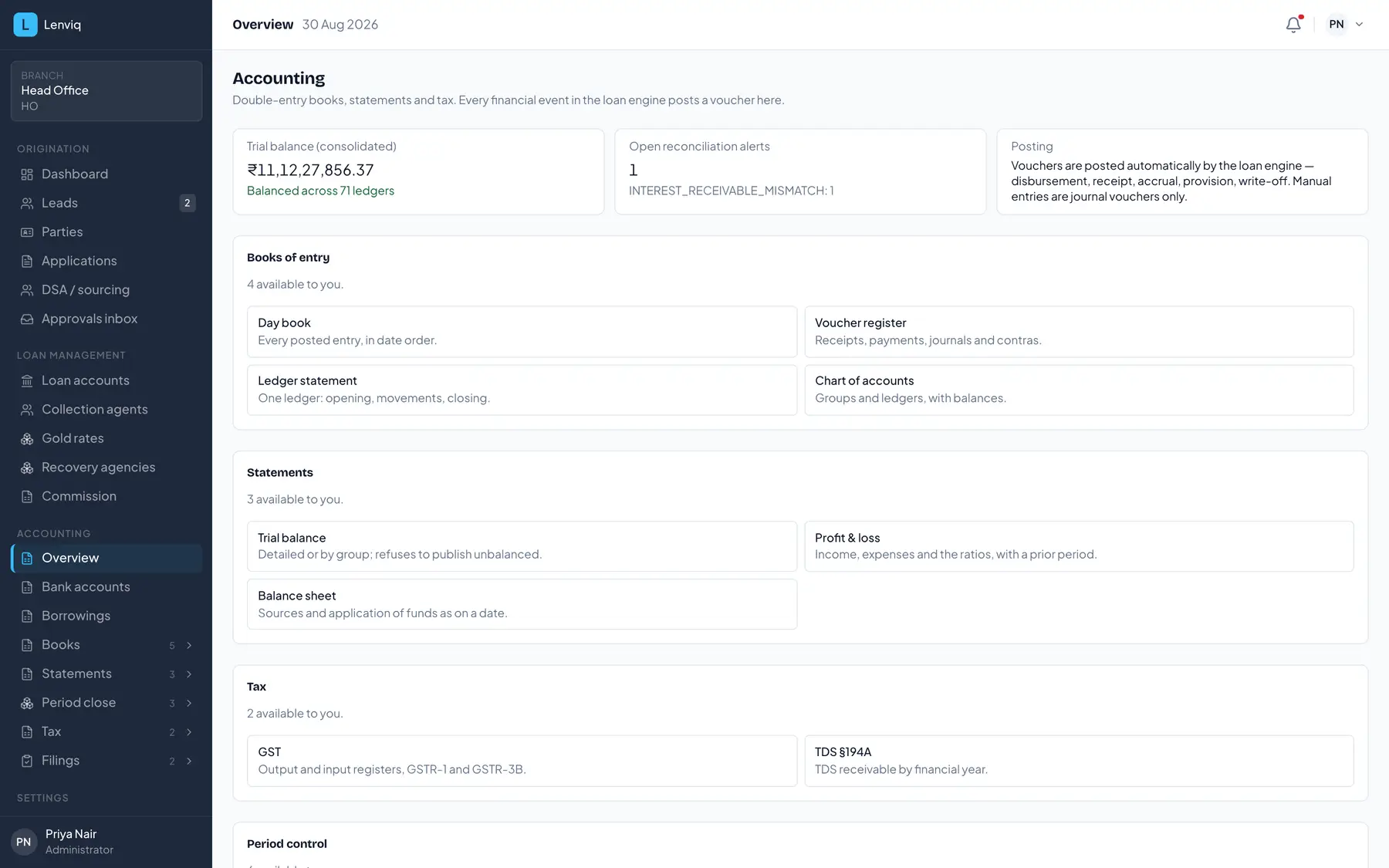
- It does the accounting. Loan events generate double-entry vouchers into a chart of accounts an Indian accountant recognises, dated on the day the event happened rather than the day the batch ran. A trial balance that foots is the test — a system whose figures have to be re-keyed has moved the reconciliation, not removed it.
- How is NPA classification computed?
- In the day-end batch, for the calendar date the batch is run for, from the due events the loan actually generated. One engine serves every product: gold, term and cash credit differ by the dues they raise, not by having their own classification path — two paths is how two answers appear.
- What happens to interest already booked when an account turns bad?
- It is reversed out of income into interest suspense on the day of classification, and only what has actually been recognised is reversed — a product that accrues daily and posts monthly has run ahead of its own books, and reversing the whole accrued balance would take back more than income ever held.
- Can it run more than one product on one engine?
- Yes, and that is the design. Products differ by the due events they generate and the behaviour codes they bind to, not by having their own servicing code. A gold loan, a cash credit limit and a twenty-year mortgage share one accrual sweep, one DPD engine and one ledger.