
Loan origination
Loan origination software, from the enquiry to the release.
Origination is the half of lending that happens before there is a loan. A lead becomes an application, the people behind it become party records, the security is valued, the bureau is read, someone approves it against a policy, and the pack is generated — and every one of those has to be reconstructable afterwards, because that is what an auditor asks for.
This page is the origination half. What happens after the money leaves is on the loan management system page, and the two meet at disbursement.
The file
Lead to disbursement, stage by stage
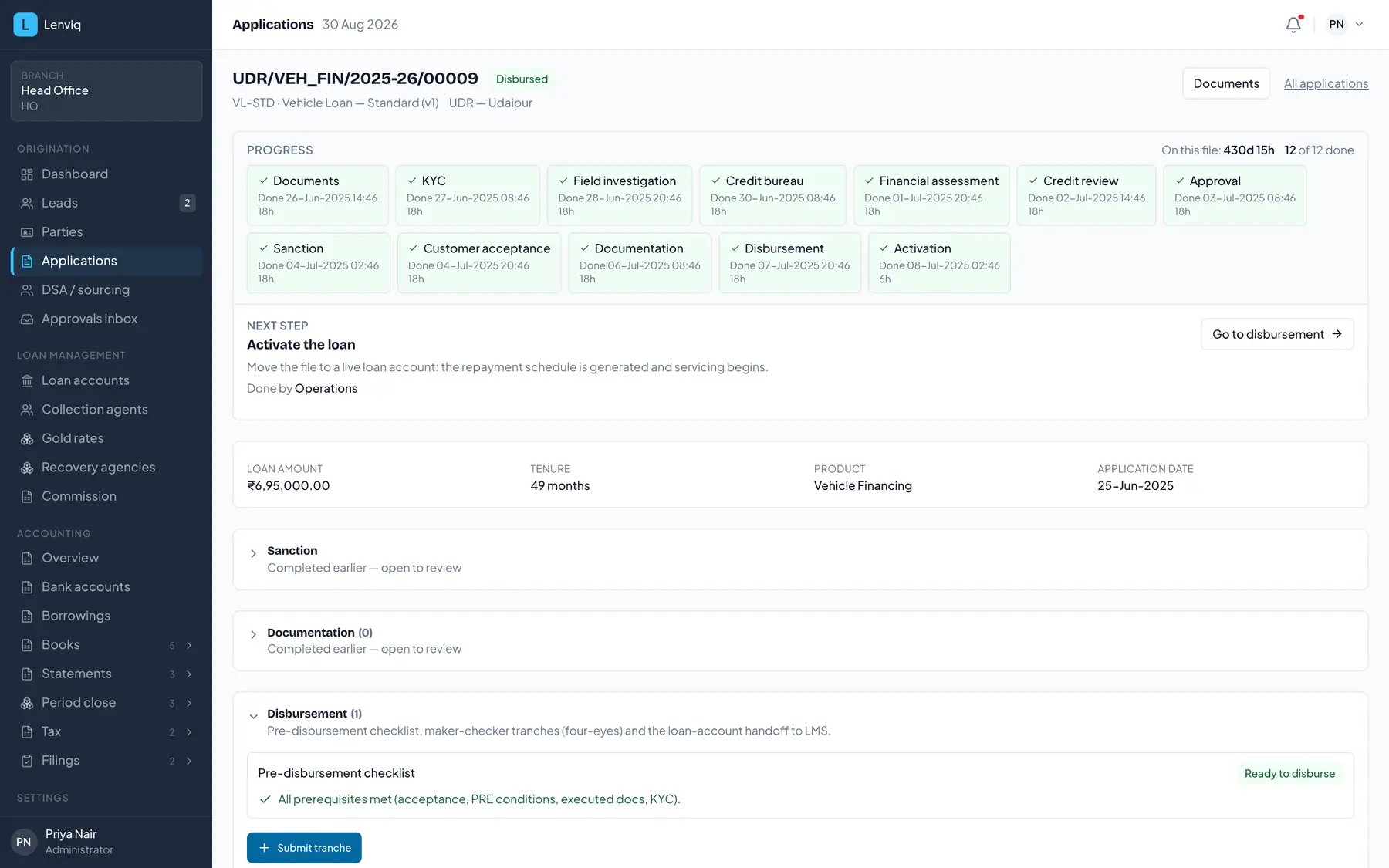
Why it holds up later
An origination file is read twice: once to approve, once to defend
Questions
What lenders ask about origination
- What is a loan origination system, and where does it stop?
- It is everything before the loan exists — lead, application, KYC, collateral, bureau, underwriting, approval, documentation — ending at disbursement. What happens afterwards, from the first instalment to closure, is loan management. The handover is disbursement, and a system that does one half leaves the other in spreadsheets.
- Does it decide the credit, or does a person?
- A person. The system holds the bureau report against the file, computes the ratios and shows its workings, routes the file by amount through the approval slabs, and records what was deviated and who allowed it. It does not approve anything on its own — an origination system that hides how a decision was reached is worth less than the decision.
- Can the scheme change after a loan is sanctioned?
- The master can change; the sanctioned loan cannot. Terms are snapshotted onto the loan at sanction, so a rate band edited next quarter does not reach back into a loan booked last quarter. Without that, no historical figure in the book can be defended.
- What does it produce at disbursement?
- The sanction and disbursement pack from the loan's own terms, a maker-checker release, and the accounting entry — the loan asset and the bank credit posted on the disbursement date rather than at month end.