
Disburse a loan
Raise a tranche, have somebody else release it, and see the money reach the borrower and the books at the same moment.
Step 6 of 11 · Operations
Disbursement is maker-checker: the person who raises it is not the person who releases it. That is not a setting somebody remembered to switch on — it is how the screen works.
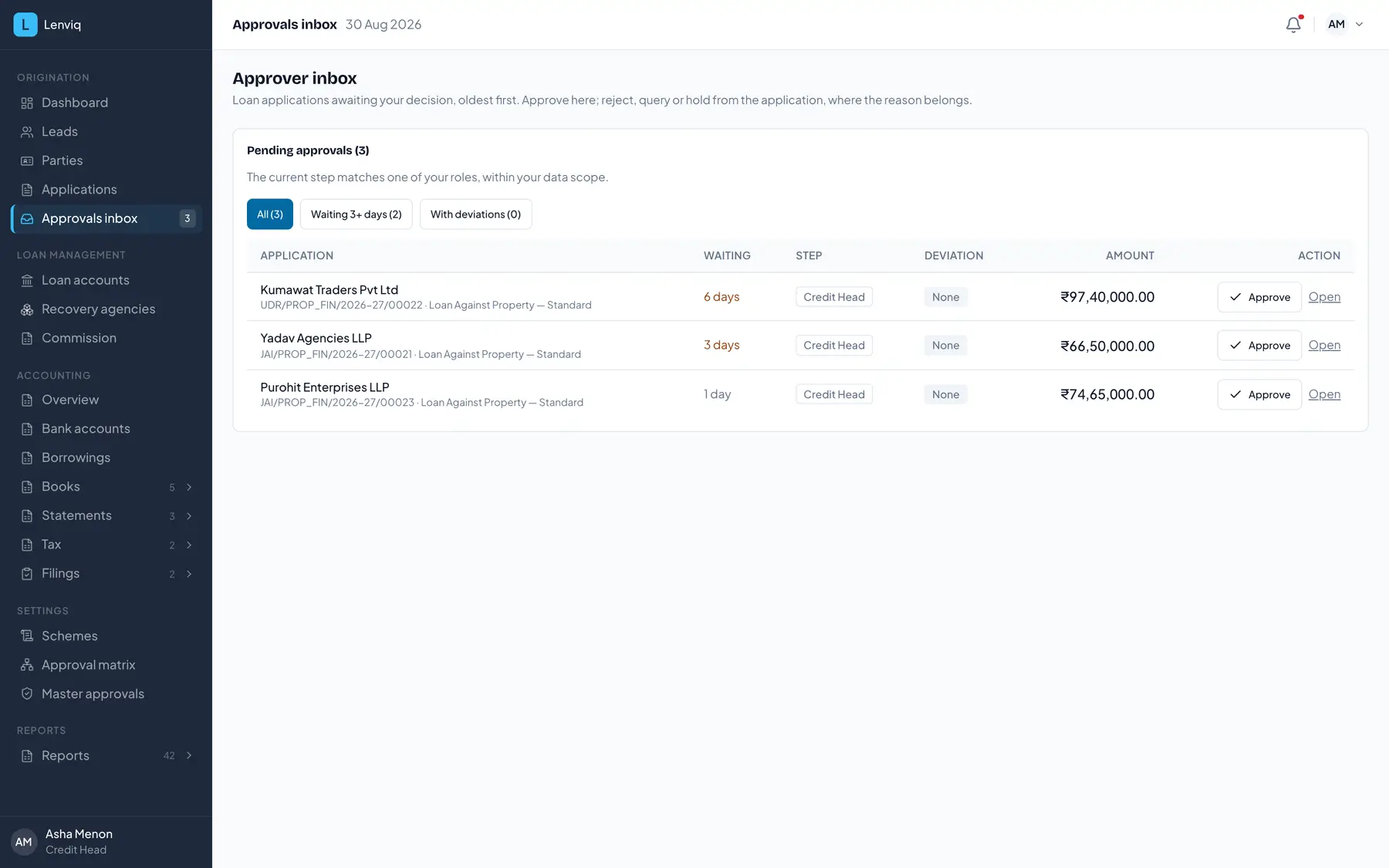
- 1Only files whose current step matches one of your roles, inside your data scope.
- 2How long it has waited. Oldest first, because that is the one going stale.
- 3Which approval step it has reached — the matrix routed it here on the amount.
- 4Signed in as a Credit Head. This menu is shorter than an administrator's because the role does not reach those screens.
What is checked before the money moves
- The account can fund it. The payout account's balance is read from the books; an account that
has not been funded refuses the payout rather than going overdrawn quietly.
- The sanction bounds it. A tranche larger than what is left of the sanction is refused.
- The product's tranche count. Most products are disbursed once. Stage-wise release belongs to
construction-linked lending, and it is a setting on the scheme — a gold loan is weighed, valued and handed over once, and a vehicle loan pays a dealer against one invoice.
Releasing it
The checker confirms the amount and the day the money actually left, which is not always the day they are looking at the screen: a transfer sent on Friday and approved on Monday is dated Friday, and the EMI schedule, the DPD clock and every repayment's floor follow that date.
Approving the same request twice releases the money once. The request is claimed the moment it is opened for release, so a double tap cannot produce two payments.
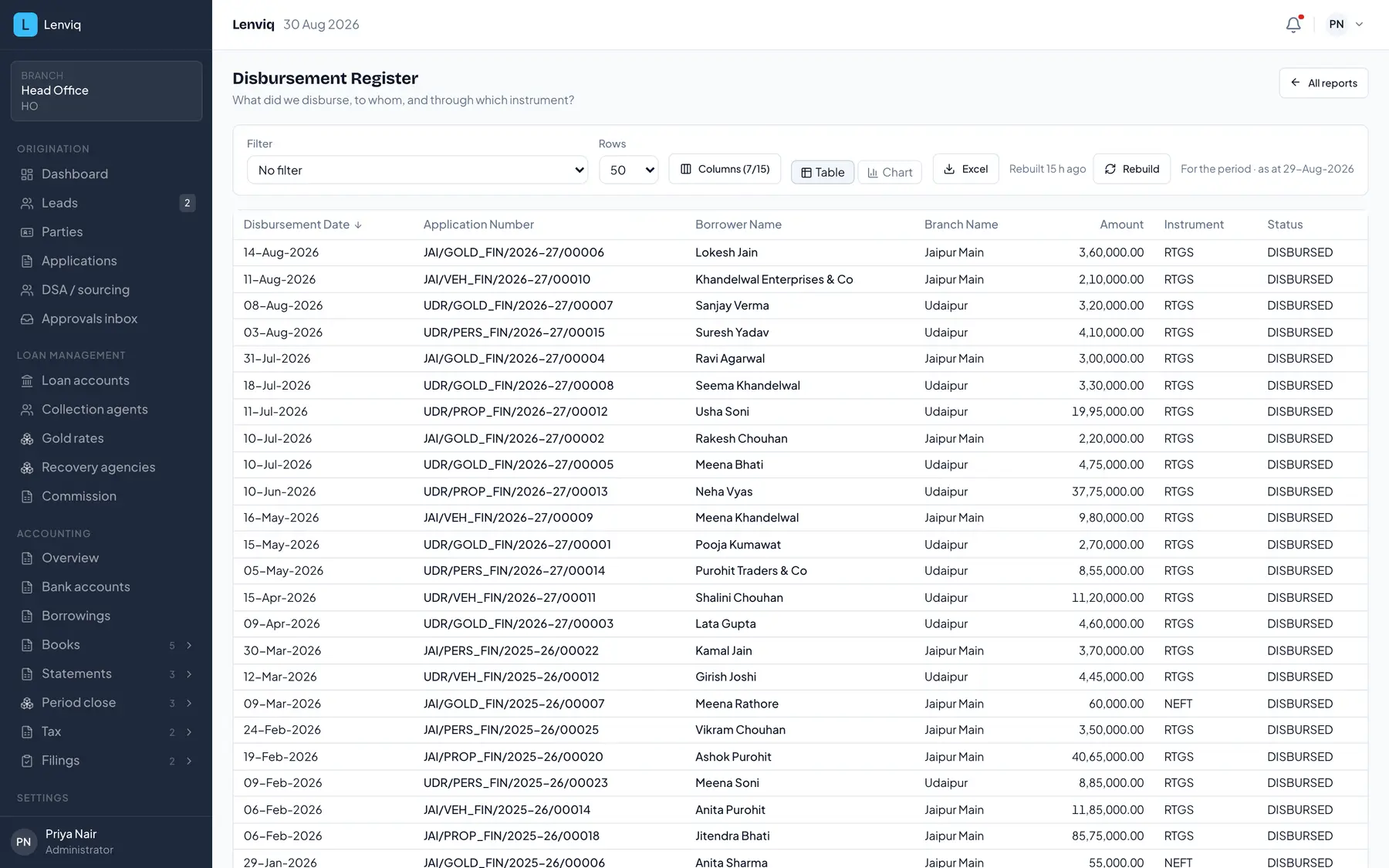
- 1Every report names the one question it answers.
- 2Filters, row count and the columns shown — the report is a view, not a fixed page.
- 3The date the figures are as at. A report built on a day-end position says which day.
- 4The instrument the money actually moved on.
What happens next
The loan account is created on the first tranche, the schedule is generated from the sanctioned terms, and the accounting entries post as it happens — there is no month-end reconciliation between an origination system and a ledger, because there is one set of facts.
The rules behind this screen are explained on the blog and the terms are defined in the glossary.
From the people who wrote this
Run your lending on Lenviq
Every screenshot on this page is the running product, taken from a demo tenant. A demo walks the same path with your own products and schemes in it.
Lenviq is loan origination, servicing and accounting for NBFCs, built by FastLegal Technologies.